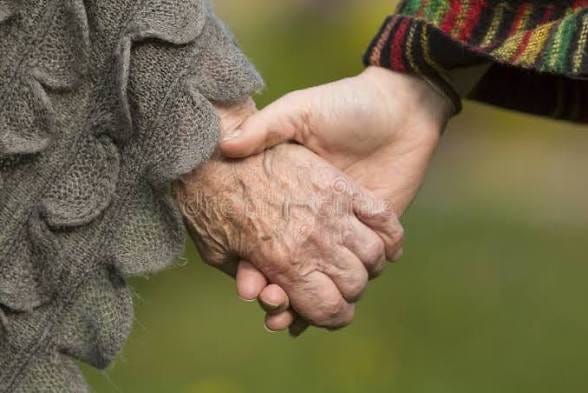
There are seasons when a woman can begin to wonder whether anybody really sees what she is carrying, whether anyone remembers the prayer she has prayed for years, or whether the parts of her life that hurt have simply become old news to everyone except her.
I think women can feel this at almost every age, although the ache changes as we do.
A younger woman may look around and watch other people step into the very life she has been praying for while her own prayers seem to remain unanswered.
Somewhere in the middle years, a woman can become so responsible for everyone else that her own heart nearly disappears beneath what people need from her.
Then there are women who reach the later seasons of life and discover that the roles which once made them necessary have changed, people have moved away, loss has rearranged the family table, and the world seems to be moving forward without asking whether they are ready.
Scripture gives us women who knew something of each of those places.
Hannah makes me think of the younger woman who keeps watching life happen for everybody else.
By the time we meet her in 1 Samuel 1, Hannah is already carrying a sorrow that has lasted long enough to become part of the rhythm of her life.
She wants a child, and she cannot have one.
Every year the family goes up to worship, and every year Peninnah’s children are there too.
Peninnah knows where Hannah hurts and deliberately presses on the wound.
There is something particularly painful about suffering beside someone who possesses the thing you have begged God to give you.
A younger woman can know exactly what that feels like even if her longing has nothing to do with children.
She may attend another wedding after years of wondering whether marriage will ever come for her.
She may watch friends announce pregnancies while she continues waiting.
Perhaps she has prayed for direction, for healing in her family, for an opportunity, for some sense that her life is moving somewhere, and every time she opens her phone somebody else appears to be receiving an answer.
People do not always mean to make that pain worse.
Sometimes they are simply living their lives, while the woman watching is fighting the guilt of wondering why somebody else’s happiness has become so hard for her to witness.
Hannah even had a husband who loved her deeply.
Elkanah asked her, “Hannah, why weepest thou? and why eatest thou not? and why is thy heart grieved?”
He cared.
Still, love from another human being could not enter every part of that sorrow.
There are pains even a good husband cannot fix, and there are longings a friend cannot talk us out of.
Sometimes the people who love us most eventually run out of things to say because they have already encouraged us, already prayed with us, already reminded us that God is good.
Meanwhile the woman living inside the unanswered prayer wakes up with it again the next morning.
The Bible says Hannah “was in bitterness of soul, and prayed unto the LORD, and wept sore.”
I am grateful Scripture allows her to be that broken.
She did not have to make the waiting pretty before God listened to her.
She brought Him the bitterness, the tears, the years of disappointment, and the prayer she had probably thought through a thousand times before.
Then, later in the chapter, there is a phrase I love.
“The LORD remembered her.”
God had never misplaced Hannah.
When Scripture speaks of the Lord remembering someone, it is not describing forgetfulness followed by a sudden recollection.
God had seen every year, every trip to Shiloh, every cruel word from Peninnah, and every prayer Hannah could barely get out.
His remembrance became visible when the time came for Him to act.
There may be a younger woman reading this who needs to hear that because you have started measuring God’s attention by the speed of His answer.
A long wait can begin to feel personal after a while.
You wonder if you have prayed incorrectly, missed something, failed some test, or somehow slipped beneath God’s notice while He tended to everybody else’s life.
Hannah reminds me that waiting and being forgotten are not the same experience in the hands of God, even when they can feel nearly identical to us.
Then I think about Hagar, and she feels different to me.
Hagar makes me think about women somewhere in the middle of life, when there are people depending upon you and circumstances have become complicated in ways your younger self never imagined.
Hagar’s story begins with decisions made by other people.
Sarah gives her to Abraham, Hagar conceives, relationships deteriorate, and eventually she finds herself running away into the wilderness.
Later she will be sent away again, this time with her son, carrying bread and water until the water is gone.
Her life repeatedly places her in positions where she seems useful until she becomes inconvenient.
That reaches something tender in me because women in the middle years can sometimes feel strangely invisible precisely because they are so useful.
Everyone knows you will handle it.
You remember appointments, keep track of who needs what, answer the phone when somebody is struggling, help aging parents, worry about grown or nearly grown children, carry concern for your marriage, serve at church, work if you have work outside the home, and continue doing ordinary things because ordinary things still have to be done no matter how tired your heart has become.
Eventually people can become so accustomed to your strength that they forget strength costs something.
You may even help create that situation because you do not always know how to say that you are tired.
You answer, “I’m fine,” because explaining everything would take too long, and sometimes you barely understand why you feel so worn yourself.
Hagar’s story reaches into that place because when she first fled into the wilderness, the angel of the Lord found her there.
Afterward Hagar said, “Thou God seest me.”
I have always loved that.
A woman whom people had treated largely according to the role she served suddenly realizes that God sees the person inside the role.
He saw Hagar.
He knew where she had come from and where she was going.
He knew the child she carried.
Years later, when she sat far enough away from Ishmael that she would not have to watch him die, God still knew exactly where she was.
There are middle seasons of womanhood where being seen by God becomes far more precious than it sounded when we were younger.
Sometimes people will overlook what you carry because they are carrying things too.
Children can love their mother and still have no idea how much she has held together.
A husband may understand parts of his wife and miss others entirely.
Church people may appreciate what a woman does without recognizing that the woman doing it has been running on fumes for months.
We are human beings surrounded by other human beings, and eventually even good people will fail to notice something we hoped they would see.
Hagar’s words remain true when that happens.
“Thou God seest me.”
That does not make every lonely place disappear, although it changes something about being there.
There is a difference between suffering unseen and suffering before the eyes of God.
He knows when you have reached your limit before you admit it.
He knows the prayers you have shortened because you were too tired to explain yourself again.
He knows what somebody said that you pretended did not bother you, and He knows the responsibilities you have carried faithfully even while wondering whether anybody would notice if you simply stopped doing them.
Then there is Naomi.
Naomi feels like the woman farther down the road who looks back and finds that life did not unfold the way she imagined when she was young.
By the time she returns to Bethlehem, she has buried her husband and her sons.
She left home during famine with a family around her, and now she is walking back with Ruth beside her and grief woven so deeply into her understanding of herself that when the women of the city recognize her, Naomi tells them she no longer wants to be called by her old name.
“Call me not Naomi, call me Mara: for the Almighty hath dealt very bitterly with me. I went out full, and the LORD hath brought me home again empty.”
I would never want to rush a woman past words like those.
Sometimes older women have earned their grief.
They have buried people.
They have watched children make decisions they could not stop.
Some have cared for husbands through illness and then gone home to an empty bed.
Others have lost marriages, friendships, health, financial security, or the sense of purpose that came from being needed every hour of the day.
Even changes that are good can ache.
Children grow up and build families of their own, which is exactly what a mother once prayed they would do, and then she discovers there are evenings when the house feels almost unnaturally still.
Grandchildren bring enormous joy while also reminding her how quickly years disappeared.
The church begins filling with younger women who are living the seasons she remembers vividly, and she may wonder where she fits now that nobody needs her to pack diaper bags, drive to ball practice, or solve the problems that once consumed every afternoon.
Naomi returned to a place that remembered her name, yet she did not feel like the woman who had left.
I think some older women understand that feeling more than they say.
There can be a strange grief in being remembered for who you used to be when you are still trying to understand who you are now.
Naomi believed she had come home empty, and I cannot fault her for feeling that way after everything she had buried.
What she could not yet see was that God was already working inside the very life she considered emptied.
Ruth was beside her.
Boaz was ahead.
A little boy named Obed would eventually be placed into Naomi’s arms, and the women who had heard her say, “I went out full, and the LORD hath brought me home again empty,” would later say, “Blessed be the LORD, which hath not left thee this day without a kinsman.”
Naomi could see backward into everything she had lost.
God could see farther.
That may be one of the hardest things about feeling forgotten.
We can only judge the story from the page we are presently living.
When the page is filled with waiting, we feel like Hannah.
When it is filled with exhaustion and displacement, Hagar makes sense to us.
When enough has been lost that we hardly recognize the woman we used to be, Naomi begins sounding painfully familiar.
Yet God saw all three women in places where their own understanding of the story was incomplete.
I do not know which season this finds you in.
Perhaps you are young enough that people keep telling you how much life you have ahead of you, while you are privately aching over the part of life you desperately wanted to have already.
Maybe you are in the middle, giving yourself in so many directions that you cannot remember the last time somebody asked how you were doing and stayed long enough to hear the real answer.
Or perhaps you have reached a later season and discovered that grief has changed your landscape, the children do not need you as they once did, and some of the people who knew the younger version of you are no longer here.
I would never insult any of those wounds by pretending a few comforting words can explain them away.
Some things hurt because they really are losses.
Some prayers remain unanswered longer than we understand.
Some people should have noticed and did not.
Some people should have stayed and left.
Some relationships will never become what we hoped they would become, and sometimes being a Christian woman means carrying disappointment while still believing God is good, which can be much harder than saying those words makes it sound.
But this is where I want to bind the wound rather than simply touch it.
The God who remembered Hannah, saw Hagar, and was still writing Naomi’s story had never lost sight of any of them.
And He has not lost sight of you right now.
There is a verse in Isaiah that feels almost painfully tender when you read it through the ache of being forgotten:
“Can a woman forget her sucking child, that she should not have compassion on the son of her womb? yea, they may forget, yet will I not forget thee. Behold, I have graven thee upon the palms of my hands.”
People may forget.
God does not.
You have never become background noise to Him.
Your age has not made you less interesting to Him.
The fact that you have prayed the same prayer for years has not made Him tired of hearing it.
Your usefulness to other people does not determine your worth before Him, and the loss of a role you once cherished has not erased the purpose He still has for the days He continues to give you.
He knows exactly where you are in the story.
Hannah did not know when she wept at Shiloh that Samuel was ahead of her.
Hagar did not know when the water was gone that God already knew where provision would come from.
Naomi could not imagine, while calling herself empty, that she would one day hold a child connected to the line through which David would come, and eventually Christ.
None of those women could see the whole thing from where they stood.
Neither can we.
So if you feel forgotten today, I hope you will give yourself enough grace to admit that it hurts.
You do not have to turn loneliness into a lesson before you are allowed to bring it to the Lord, and you do not have to apologize because a wound still aches after everybody else seems to think you should have moved on.
Bring Him the ache as it actually is.
He already sees it.
Then, when you have cried whatever needs to be cried, remember whose eyes have never left you.
You may feel forgotten by people you thought would remember.
You may even feel forgotten by the woman you used to be, because life has changed you so thoroughly that you barely recognize her anymore.
But you have never been forgotten by God.
The same Lord who heard Hannah, found Hagar, and walked Naomi home is still very good at finding women who wonder whether anybody remembers where they are.
And He knows exactly where you are.
Biblical Womanhood
If the ministry at Biblical Womanhood has been a blessing to you, would you consider becoming a paid subscriber? Every subscription helps get content like this out for others.
If you’re not really able to do a subscription, you can also donate as a one time gift here:
Want to go deeper?
One Generation to Another is a practical 10-session workbook created for both sides of the Titus 2 relationship.
Older women can use it to sharpen their own biblical understanding and prepare to faithfully teach the women coming behind them, while younger women who are still praying for a Titus 2 mentor can begin studying these truths for themselves.
With KJV Scripture, honest reflection questions, practical application, and conversation prompts, this study is meant to help us recover something the church desperately needs: one generation of faithful women intentionally passing biblical truth to the next.
*this digital PDF will be personally emailed out in a reasonable timeframe following your purchase, it will go to the email associated with your substack. If you don’t see it, check your spam folder!